

Talking Flash Cards at a Glance
In today’s fast-paced, screen-heavy world, parents and educators are constantly searching for smarter ways to help children learn effectively without overwhelming them. That’s exactly where talking flash cards step in as a practical, engaging, and refreshingly simple learning tool. Designed to combine visual cues with clear audio pronunciation, talking flash cards bridge the gap between play and structured education—making learning feel natural rather than forced.
Talking flash cards have quickly gained popularity because they tap into how young minds actually work. Children learn best when they can see, hear, and repeat, and these cards do precisely that. Whether it’s identifying everyday objects, learning new words, or improving pronunciation, talking flash cards turn repetition into an enjoyable experience instead of a chore. Parents often notice that children using these tools stay focused longer and show greater confidence when speaking.
What truly sets talking flash cards apart is their adaptability. They work equally well at home, in classrooms, and even during travel. Unlike passive learning methods, these cards actively invite children to participate—pressing, listening, repeating, and responding. This interaction strengthens memory, improves listening skills, and supports early language development in a way that feels intuitive.
As concerns around excessive screen time continue to grow, talking flash cards offer a balanced alternative. They provide modern audio support without the distractions of apps or videos. In this article, we’ll explore the must-know advantages of talking flash cards, uncover how they support faster language development, and explain why they’ve become a trusted tool for parents and educators alike.
Talking Flash Cards and Early Childhood Learning

Talking flash cards play a crucial role in early childhood learning because they align beautifully with how young children naturally absorb information. At an early age, kids are curious, observant, and eager to imitate sounds they hear around them. Talking flash cards take advantage of this developmental window by pairing simple visuals with clear, spoken words, creating a multi-sensory learning experience that feels almost effortless.
One of the strongest advantages of talking flash cards is how they transform passive observation into active participation. Instead of merely looking at pictures, children press, listen, respond, and repeat. This interaction helps cement connections between images, sounds, and meanings. Over time, children begin to recognize patterns, associate words with objects, and recall information faster—all essential foundations for early literacy and language growth.
Audio-visual learning is especially powerful during the early years because the brain is rapidly forming neural pathways. When children hear a word while seeing its visual representation, multiple areas of the brain are activated at once. Talking flash cards leverage this process by reinforcing learning through repetition without boredom. Kids don’t feel like they’re “studying”; they feel like they’re playing, which naturally increases motivation and retention.
Another often-overlooked benefit is confidence building. Many children hesitate to speak when they’re unsure of pronunciation. Talking flash cards provide consistent, judgment-free repetition. A child can listen to the same word again and again, practice saying it aloud, and slowly gain confidence. This safe environment is particularly helpful for shy learners or children who are just beginning to develop verbal skills.
Talking flash cards also introduce structure without rigidity. Parents and educators can guide sessions or allow children to explore independently. This flexibility supports both guided learning and self-directed discovery. Whether used for colors, animals, everyday objects, or action words, talking flash cards adapt easily to a child’s pace and learning style.
In early childhood education, consistency matters—and talking flash cards deliver exactly that. The pronunciation never changes, the visuals remain clear, and the learning experience stays predictable. This reliability helps children feel secure, focused, and eager to engage, making talking flash cards a trusted foundation for early learning success.
Talking Flash Cards for Language and Speech Development
Language development is one of the most critical milestones in early childhood, and talking flash cards offer a remarkably effective way to support it. By consistently exposing children to clear pronunciation and everyday vocabulary, talking flash cards help build a strong linguistic foundation that carries over into reading, writing, and confident communication.
One of the biggest advantages of talking flash cards is vocabulary expansion through repetition. Young learners thrive on hearing words multiple times, especially when those words are paired with images they recognize. Talking flash cards make repetition engaging rather than tedious. Children naturally press the card again and again, reinforcing word recognition and meaning without realizing they’re practicing. Over time, this repetition leads to stronger word recall and faster language acquisition.
Pronunciation is another area where talking flash cards truly shine. Many parents worry about teaching incorrect pronunciation, especially when introducing new or unfamiliar words. Talking flash cards eliminate that concern by providing consistent, accurate audio output. Children hear the correct pronunciation every time, allowing them to mimic sounds confidently. This is especially helpful for children who are learning to speak clearly, have delayed speech development, or are exposed to multiple languages at home.
Talking flash cards also support phonics awareness, which is essential for early literacy. When children hear how words sound while seeing them represented visually, they begin to understand sound patterns. This strengthens their ability to distinguish between similar sounds, recognize syllables, and eventually decode words when learning to read. These early phonetic skills make the transition to books and formal reading instruction much smoother.
Another powerful benefit is how talking flash cards encourage verbal interaction. Children are more likely to speak out loud when prompted by sound rather than text alone. Many kids instinctively repeat what they hear, turning each card into a mini conversation. This verbal practice builds confidence and helps children feel comfortable expressing themselves, even before they can form full sentences.
Talking flash cards are also valuable for children learning a second language. Hearing native-like pronunciation paired with simple visuals reduces confusion and supports natural language immersion. Parents and educators often use talking flash cards to introduce basic words in a second language without pressure, allowing children to learn at their own pace.
By combining sound, sight, and interaction, talking flash cards create an ideal environment for language and speech development. They don’t rush children or force outcomes. Instead, they gently guide young learners toward clearer speech, stronger vocabulary, and a growing love for communication.
Cognitive and Brain Development Benefits of Talking Flash Cards
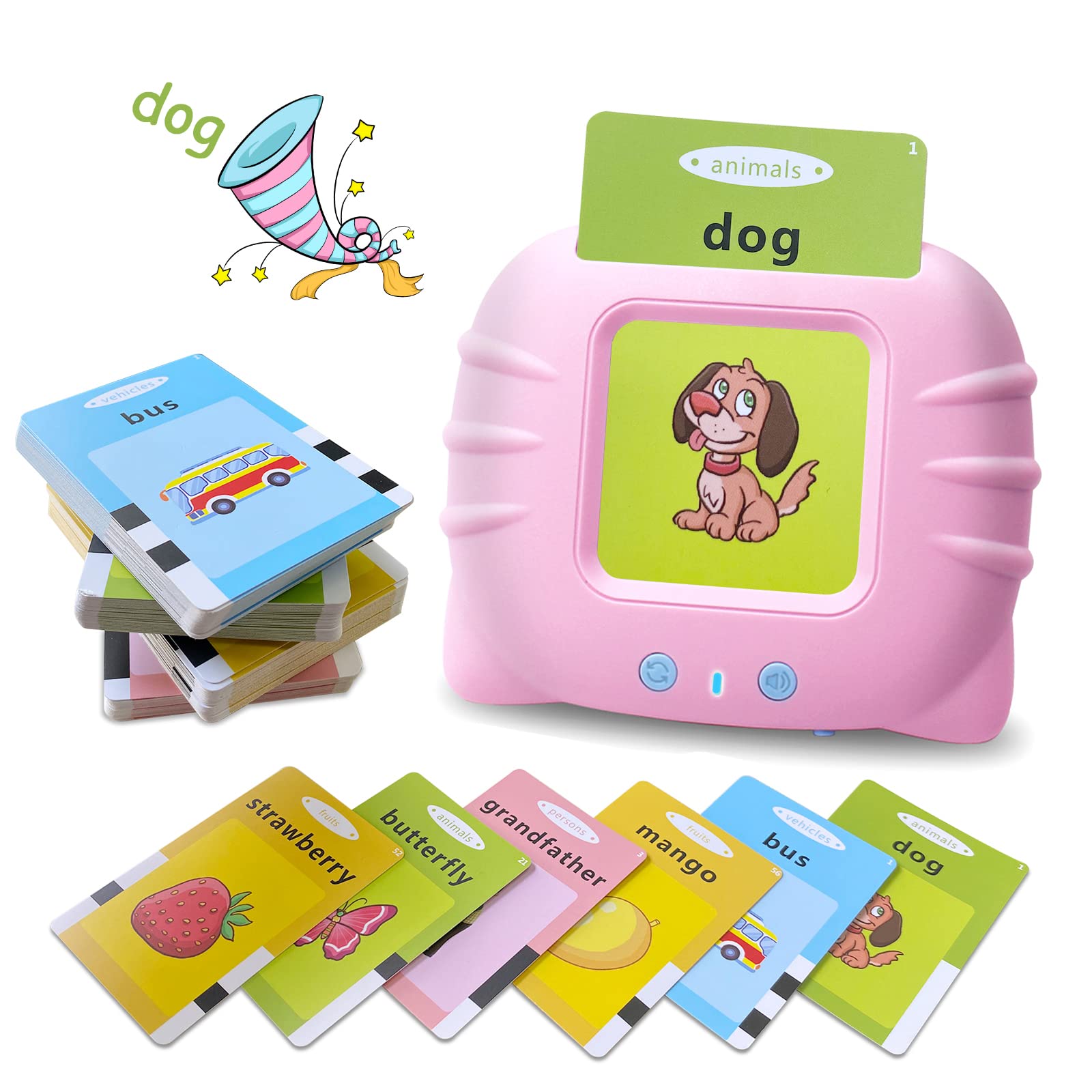
Beyond language skills, talking flash cards play a powerful role in shaping a child’s cognitive and brain development. During early childhood, the brain is highly adaptable, constantly forming new neural connections based on experiences. Talking flash cards stimulate multiple senses at once—hearing, sight, and touch—which strengthens these connections and supports healthy brain growth in a natural, enjoyable way.
One of the most important cognitive benefits of talking flash cards is improved auditory processing. When children listen carefully to spoken words, tones, and pronunciation, they learn to distinguish sounds more accurately. This skill is essential not only for language development but also for following instructions, understanding conversations, and developing strong listening habits. Talking flash cards gently train children to pay attention to sound cues without pressure or frustration.
Attention span and focus also improve with regular use of talking flash cards. Unlike fast-paced digital content, these cards encourage calm, intentional interaction. Children focus on one word or image at a time, reducing cognitive overload. This slower pace allows young learners to fully process information, improving concentration and reducing distractions. Over time, children become more patient and engaged learners—skills that benefit them well beyond early education.
Memory development is another area where talking flash cards excel. Repetition combined with audio-visual cues helps transfer information from short-term memory to long-term memory. When a child repeatedly hears and sees the same word, the brain recognizes it as important and stores it more efficiently. This memory-building process supports later academic skills such as reading comprehension, problem-solving, and critical thinking.
Talking flash cards also encourage logical thinking and categorization. Many sets group words by themes such as animals, food, colors, or actions. As children interact with these cards, they begin to recognize similarities, differences, and patterns. This ability to categorize information lays the groundwork for math skills, reasoning, and structured thinking later in life.
Another often-overlooked cognitive advantage is emotional regulation. Talking flash cards provide predictable responses—press a card, hear a word. This consistency helps children feel secure and in control, especially those who may feel overwhelmed in noisy or busy environments. The calm repetition can be soothing, making learning a positive emotional experience rather than a stressful one.
By engaging the brain in multiple, meaningful ways, talking flash cards support overall cognitive development without forcing outcomes. They nurture curiosity, reinforce focus, and build strong mental foundations—all while keeping learning playful and stress-free.
Talking Flash Cards in Modern Parenting and Education
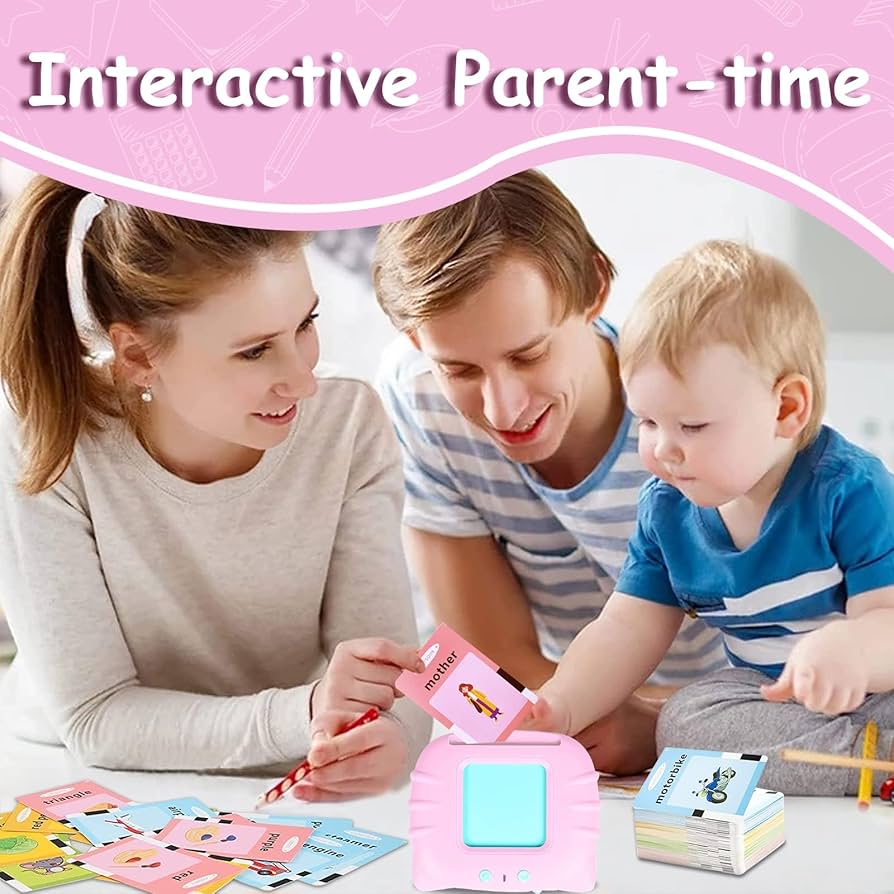
In today’s learning landscape, parents and educators are under growing pressure to balance effective education with healthy developmental habits. Talking flash cards have emerged as a trusted solution because they blend traditional learning values with modern convenience. They fit seamlessly into daily routines while supporting meaningful, hands-on learning without relying heavily on screens.
For parents, talking flash cards offer peace of mind. Many families are actively reducing screen time, yet still want tools that feel engaging and up to date. Talking flash cards meet that need perfectly. They provide audio guidance without apps, ads, or overstimulation. Parents can confidently hand them to children knowing the experience is focused, safe, and educational. Whether used during playtime, travel, or quiet learning moments, talking flash cards adapt easily to home life.
Another reason parents favor talking flash cards is their ease of use. No setup, no technical learning curve, and no constant supervision required. Children can use them independently, which fosters self-confidence and autonomy. Parents often notice that kids naturally gravitate toward these cards, choosing them over passive entertainment because they feel interactive and rewarding.
In educational settings, talking flash cards have become valuable classroom tools. Teachers use them to reinforce lessons, support diverse learning styles, and accommodate different learning speeds. Because talking flash cards combine sound and visuals, they’re especially effective for auditory and visual learners. They also work well in small groups, learning stations, or one-on-one instruction.
Talking flash cards are particularly helpful in inclusive classrooms. Children with speech delays, learning differences, or limited language exposure benefit from consistent pronunciation and repetition. Educators appreciate how these cards provide uniform instruction while still allowing flexibility in how lessons are delivered. This consistency helps level the learning field without singling out individual students.
Another major advantage is collaboration. Talking flash cards encourage interaction between adults and children. Parents often sit with kids, repeating words together or turning learning into a game. Teachers use them to prompt group responses or storytelling activities. These shared moments strengthen communication and reinforce learning through social engagement.
In both homes and classrooms, talking flash cards serve as a bridge between play and purposeful learning. They support structured education while preserving curiosity and joy. As modern parenting and education continue to evolve, talking flash cards remain a simple yet powerful tool that aligns with how children learn best—through interaction, repetition, and connection.
Choosing the Best Talking Flash Cards for Your Child
With so many learning tools available today, choosing the right talking flash cards for your child can feel overwhelming. Not all sets are created equal, and selecting the best option depends on age, learning goals, and how your child engages with educational play. Understanding what truly matters can help parents and educators make confident, informed decisions.
Age-appropriateness is the first and most important factor. Younger toddlers benefit from talking flash cards that feature simple images, basic vocabulary, and clear, slow pronunciation. Bright visuals and durable materials are essential at this stage, as little hands explore through touch. For older preschoolers, talking flash cards that introduce more complex words, actions, or categories help keep learning challenging and engaging without frustration.
Sound quality is another critical consideration. The audio should be clear, natural, and easy to understand. Poor sound quality can confuse children and reduce the effectiveness of learning. High-quality talking flash cards use consistent pronunciation and volume, allowing children to focus on learning rather than deciphering unclear sounds. This consistency is especially important for language development and speech clarity.
Safety and durability also matter. Children use flash cards repeatedly, so sturdy construction and non-toxic materials are essential. Rounded edges, strong cards, and child-safe components ensure long-term use without worry. Parents should always check product descriptions and certifications to ensure the talking flash cards meet safety standards.
Another key decision is choosing between physical and digital-style talking flash cards. Physical talking flash cards are often preferred because they limit screen exposure while encouraging hands-on learning. They promote focus, reduce distractions, and offer a tactile experience that many children find comforting. Digital versions may offer more content, but physical cards often provide a healthier balance for early learners.
Content variety is equally important. The best talking flash cards cover a wide range of themes—animals, objects, colors, actions, and everyday life. This variety keeps children interested and supports broader vocabulary development. Some sets also allow expansion, making them useful over a longer period as your child grows.
Ultimately, the best talking flash cards are the ones your child enjoys using. Engagement leads to repetition, and repetition leads to learning. When children are excited to press, listen, and repeat, education happens naturally. Choosing thoughtfully ensures that talking flash cards become a trusted, effective part of your child’s learning journey.
Frequently Asked Questions About Talking Flash Cards
Are talking flash cards suitable for toddlers?
Yes, talking flash cards are ideal for toddlers when they are age-appropriate. Sets designed for young children use simple words, clear pronunciation, and bright visuals. They help toddlers associate sounds with images and encourage early speech without overwhelming them.
Can talking flash cards replace traditional learning methods?
Talking flash cards are best used as a supplement rather than a replacement. They enhance traditional learning by reinforcing vocabulary, pronunciation, and listening skills. When combined with books, conversation, and play, they create a well-rounded learning experience.
How often should children use talking flash cards?
Consistency matters more than duration. Short, daily sessions of 10–15 minutes are usually enough. Regular exposure helps reinforce learning while keeping children engaged and avoiding fatigue.
Do talking flash cards help with speech delays?
Many parents and educators find talking flash cards helpful for children with mild speech delays. The clear, repeatable pronunciation provides a safe way for children to practice sounds and words at their own pace. However, they should complement professional guidance when needed.
Are talking flash cards better than mobile learning apps?
Talking flash cards offer advantages over apps by reducing screen time and distractions. They encourage hands-on interaction, focused attention, and calmer learning experiences, which are especially beneficial for younger children.
Can talking flash cards be used for learning a second language?
Absolutely. Talking flash cards are commonly used to introduce basic vocabulary in a second language. Hearing consistent pronunciation paired with visuals helps children absorb new words naturally and without pressure.
Final Thoughts on Talking Flash Cards
Talking flash cards have earned their place as one of the most effective and trusted learning tools for young children. By combining sound, visuals, and interaction, they support language development, cognitive growth, and confident communication in a way that feels playful rather than instructional. Children don’t just memorize words—they experience them.
For parents, talking flash cards offer a reassuring balance between modern learning and traditional values. They reduce reliance on screens while still providing engaging, audio-supported education. For educators, they serve as flexible tools that adapt to different learning styles, classroom needs, and developmental stages.
What truly makes talking flash cards stand out is their simplicity. There’s no complex setup, no overstimulation, and no pressure to perform. Children learn at their own pace, guided by curiosity and repetition. This gentle approach builds strong foundations that benefit reading, listening, and problem-solving skills later in life.
As early education continues to evolve, talking flash cards remain a timeless solution rooted in how children naturally learn. When chosen thoughtfully and used consistently, they become more than just learning aids—they become companions in a child’s journey toward confident language development and lifelong learning.

Kinamabaiman Ikiogha is a digital marketer, content creator, and web developer. He is the founder of Compare Zaddy, a website that is dedicated to making shopping easier for savvy shoppers. At CompareZaddy, we take a look at the best-selling products that are similar and compare them side-by-side against several benchmarks. Read more here
0 Comments